Rideshare drivers are one of the most underpaid groups of workers in this country. That ends now.
For too long, this systematic exploitation has been allowed to go unchecked. The pay does not reflect the effort you put in, and the platforms have made sure of it. TWU members have opened a door that has never been open before, and we are closer than ever to real change. Here's exactly where the case stands.
Low pay. No transparency. No trip info. No cost recovery. High abuse. These are just some of the realities for rideshare drivers across Australia.
The pay does not reflect the effort. It has never been designed to.
Rideshare drivers are among the most underpaid workers in this country. The platforms have cut what drivers earn per kilometre and per minute, again and again, over years. There was no vote. No say. No floor on how low it could go. The platform sets a number in an app. You either drive for it or you do not.
- Per-kilometre and per-minute rates slashed repeatedly with no say from drivers
- Fuel, insurance, maintenance and vehicle costs rising while rates fall
- No minimum, no floor, no way to push back
Small wins. Too slow to give and too quick to take away.
Drivers have tried to push back for years — protests, blocking airports, one-off meetings where platforms nod along and change nothing. That anger is the right anger. But it does not change anything. The cameras move on, and the rates stay exactly where they were. When the pressure fades, so does whatever they gave.
- No legally required minimum pay rate
- Any increase they offer can be taken back without notice
- Voluntary gestures designed to manage pressure, not fix the problem
For the first time, we are not asking. We are at the table.
Uber and DiDi are at the Fair Work Commission, Australia's national body for setting workplace rules. Not a voluntary meeting. Not on the platform's terms. Workers have a say in shaping the standards themselves — and what the Fair Work Commission sets is written into law. It is not a gift the platform can take back. It applies to every rideshare driver in the country.
- A minimum earnings floor that covers what it actually costs to do the job
- Upfront fare information so you can decide whether a trip is worth taking
- A minimum pay floor that platforms cannot cut, full stop
- A way to raise problems and have them properly dealt with
We gathered the evidence. The results are damning.
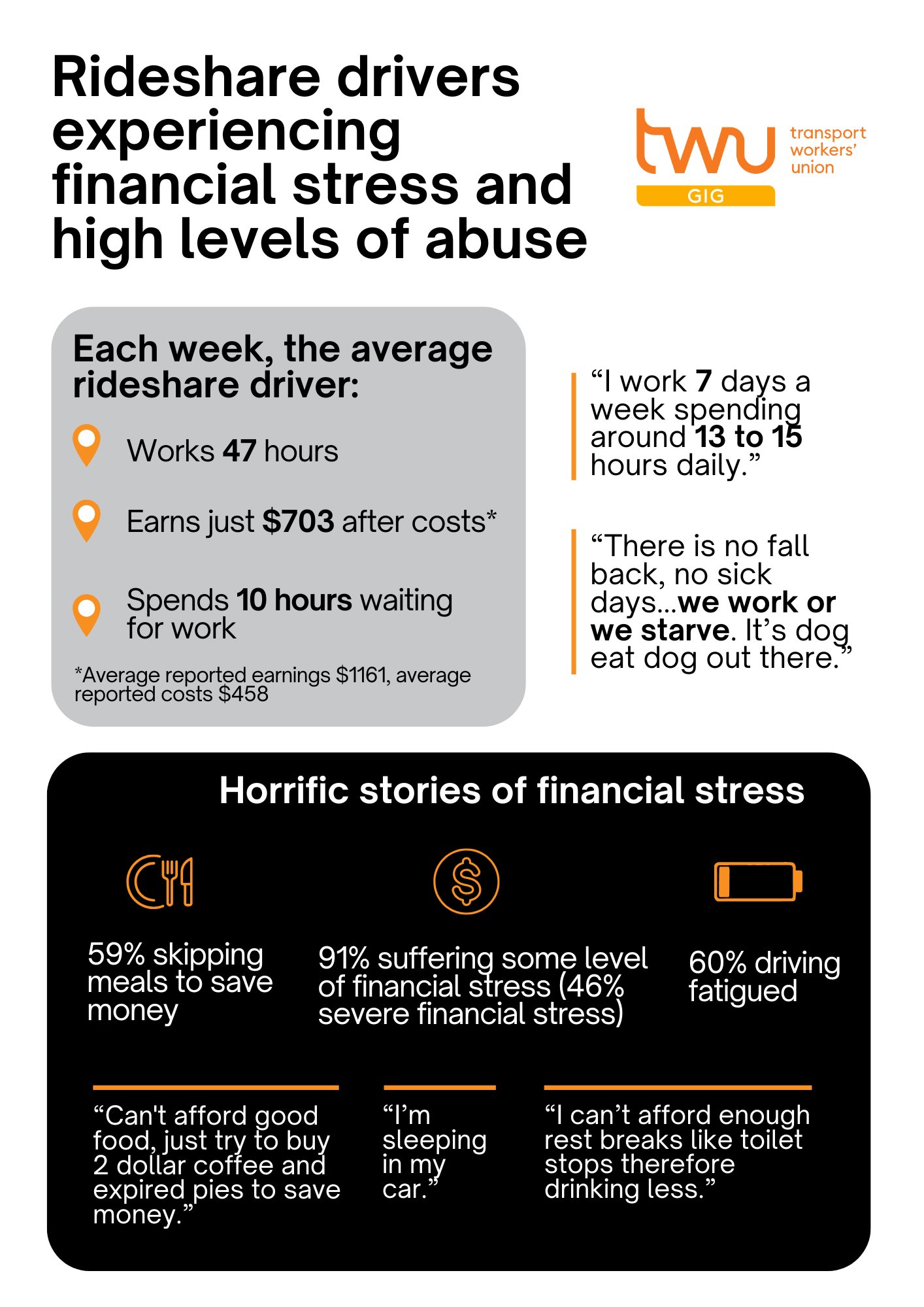
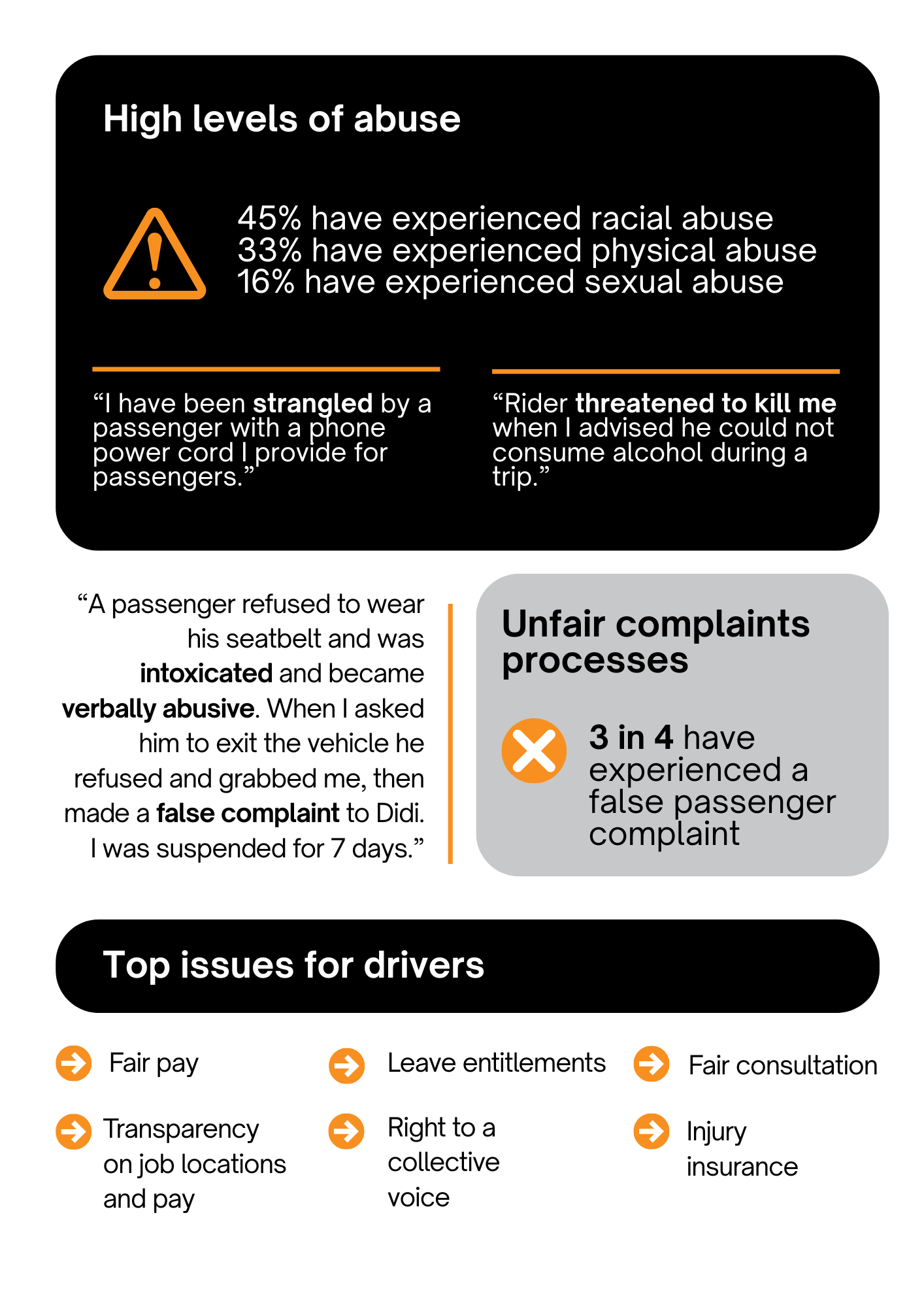
Over the past year, TWU gig members gathered hard data through the TWU Rideshare Survey. The results confirm what drivers already know but platforms deny.
Source: TWU Rideshare Survey — see the full results below.
Low pay. No transparency. High abuse. This is what that adds up to.
For the first time, drivers get to set the standards.
Local pressure. Individual complaints. Small wins reversed overnight. Nothing ever stuck. Then TWU members won new laws giving workers the right to take a case to the Fair Work Commission for minimum standards across the whole gig economy. For the first time, rideshare drivers have won a system that allows drivers themselves to set standards in this industry.
This application gives drivers the power to address and resolve the most pressing issues you face at work today — poor pay, no fuel cost recovery, no accident insurance, and unsafe working conditions.
Uber and DiDi had to show up. Not because they chose to. Because they had no choice.
TWU members are already at the Fair Work Commission.
Here's where the case stands and what has happened so far.
Application filed
Using new rights won under Transport Reform, TWU members formally lodge the case with the Fair Work Commission — the first step toward minimum standards for rideshare drivers.
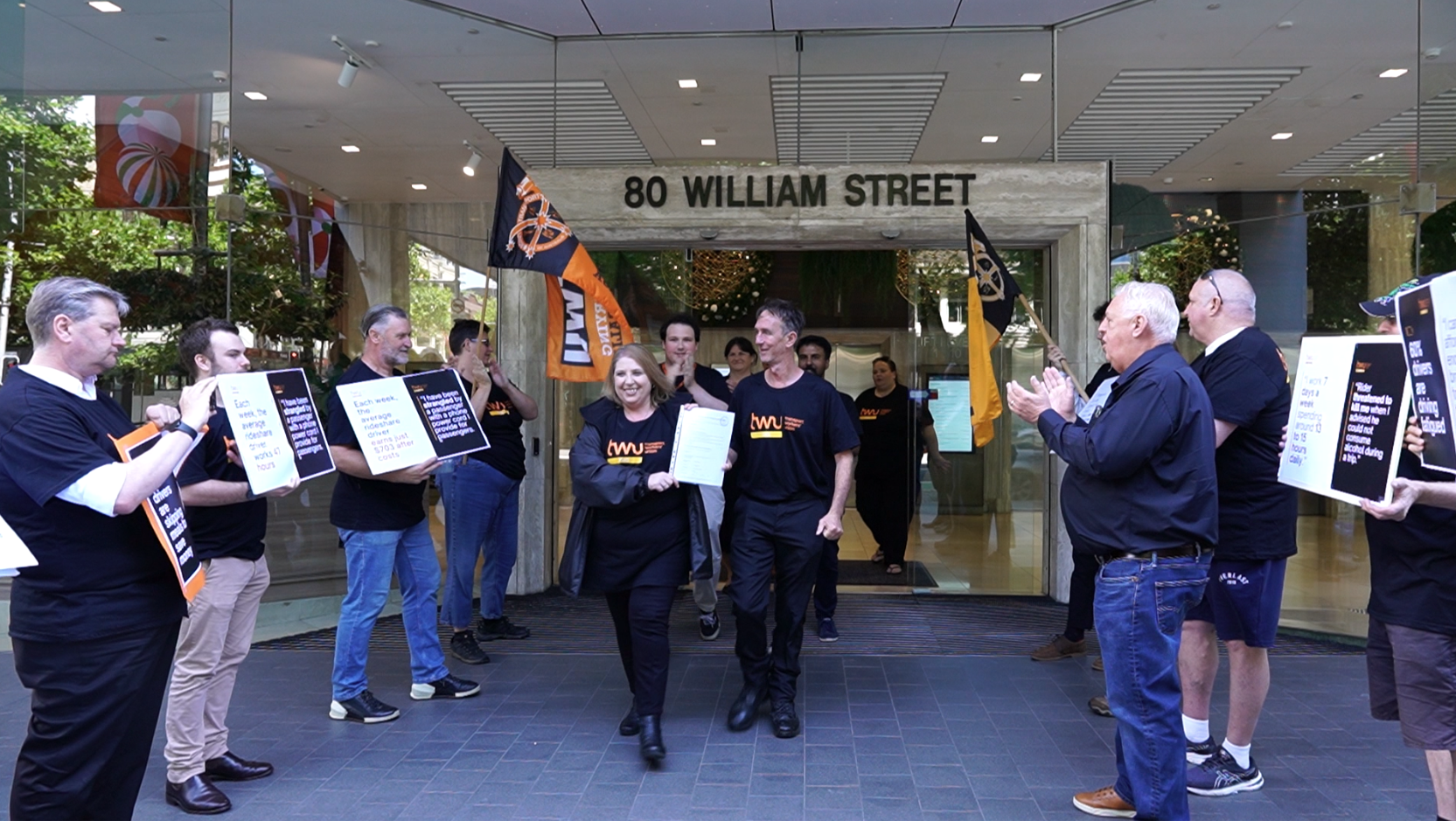
Mention before Justice Hatcher
Uber and DiDi are both required to appear and be named in proceedings. TWU's Lorraine Biviano tells the Commission: "The workers covered by this application currently have no minimum standards in place and generally operate on the margins."
Allocated for conferencing, first conference this week
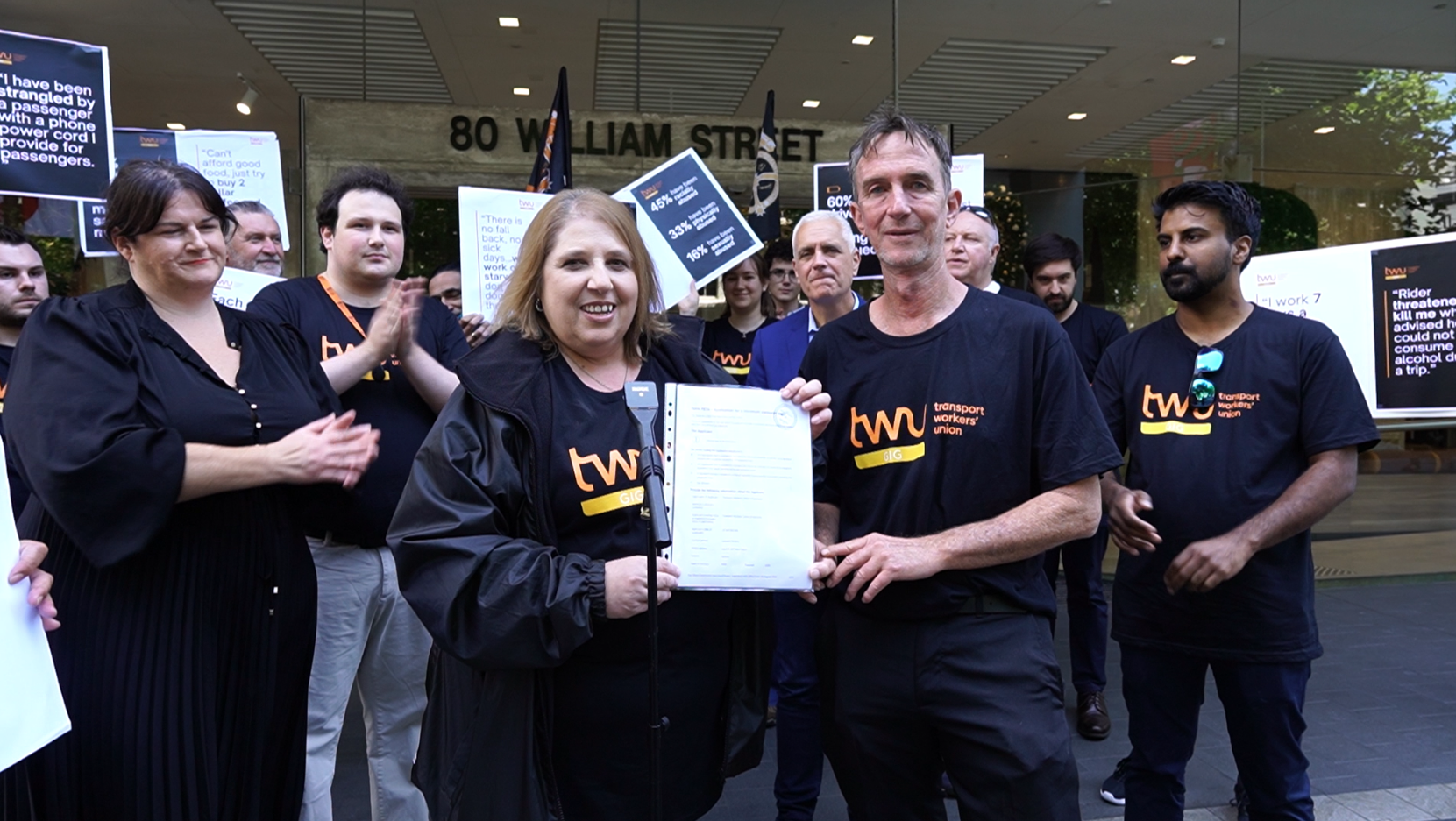
19 June: Justice Hatcher allocates the matter directly to Commissioner Tran to run a conferencing process. 29 June: a case management conference maps out how it will run and locks in a date. 13 August, 10:00am: the first in-person conference before Commissioner Tran, Fair Work Commission, Terrace Tower, 80 William Street, East Sydney.
Evidence and submissions filed
TWU members, drivers, and the platforms file witness statements, expert reports and submissions for the Commission to consider. This is the same step that shaped the food delivery case before it.
Expert Panel hearing
A multi-day hearing before the Expert Panel for the road transport industry. The Commission tests the evidence and hears submissions from every party: TWU members, Uber, DiDi, and any other affected businesses.
Minimum standards order made
A legally enforceable minimum standards order for rideshare drivers. Food delivery workers reached this stage this month. Rideshare is next.
What we're calling for in our Rideshare Application.
Fair pay
- A minimum safety net on pay that helps you recover costs for vehicle expenses, road tolls, insurances and labour
- Weekly reconciliation of payments, topping up to the minimum safety net if necessary
- Safety net adjusted according to significant cost fluctuations such as fuel
Allowances
- Set payment when trips are cancelled by a rider
- An allowance for returns on inter-city trips — drivers currently have to cover return trips out of their own pocket
Trip info and transparency
- Transparency on how payments are calculated
- Upfront info on trips offered, so drivers know where jobs are and how long they'll take
Safety and training
- Company-funded transport training with BlueCard, the industry standard
- Mandatory personal injury insurance, not a thin in-app button
A voice at work
- The establishment of consultation committees so drivers get a say
- Company to provide information on rights to workers
- Disputes clauses to give drivers rights about issues at work and the ability to raise them with the platform
More drivers. More power. A better chance of winning.
Anger got us to the table. Numbers are what keep us there. Every driver who joins isn't signing up to some outside organisation — drivers are your union. The more of us stand together, the stronger the case, and the better our chance of winning the standards we deserve.
The more of us stand behind this case, the harder it is for Uber and DiDi to ignore. Every driver who joins adds to that number. Every driver who signs the pledge, and brings another driver with them, adds to it again.
Every driver who joins counts. Every driver who signs counts. That's how we win.
Anger got us here. Organising is how we win. Here's what to do right now.
Get involved now.
A TWU member representative is taking driver issues into the Fair Work Commission conference process. Once the first conference has taken place, we'll share what can be shared with members. In the meantime, the best way to get across the campaign and get involved is the rideshare webinar.
Finding your next organising step
The webinar walks through what the conference phase means, how the campaign pathway works, and the next organising step for members. If you're already across it, bring one other rideshare driver with you.
Keep an eye on your inbox for a webinar invite.
Not a member yet? Join the TWU and your delegate will make sure you're across it too.
I support fair rates for rideshare drivers.
Low pay. No transparency. No trip info. No cost recovery. High abuse.
Thousands of drivers have told us they're fed up with being underpaid, kept in the dark, and treated as disposable. Sign the pledge to get our Rideshare Application over the line soon. By signing today, you're sending a clear message that thousands of drivers are:
- United behind this application
- Gathering momentum each day to win real change
- Ready to keep fighting until real pay rises, transparency, and safety improvements are delivered
If you're one of those drivers, sign the pledge now and help turn this first step into real, enforceable change.
What does this mean for you?
What is an "employee-like worker"?
Can this cap how much I earn?
Will it affect my flexibility?
Has this worked before?
What happens after the conference on 13 August?
I'm not a citizen or permanent resident — can I still join?
Why is this application historic?
What support can TWU members access?
The TWU is your union for rideshare drivers.
Every member of the Transport Workers' Union is another voice shaping the future of the gig economy — and we need your voice too.
- Filed the first-ever national case for rideshare minimum standards, and taken Uber and DiDi to the Fair Work Commission to answer for it
- Provides support, information and legal representation for members, including for unfair deactivations
- Actively campaigns for a safe, just and dignified gig economy
- A minimum standards order now in effect for food delivery workers, with a safety net on pay
- Unfair deactivation support — we've taken cases to the Fair Work Commission on behalf of our members and won
- Delegates' rights, so members can elect workplace leaders entitled to paid leave to carry out their union role
TWU members won those rights by standing together. We're made up of over 60,000 members right across the transport industry — and rideshare drivers are next. This is just the start.
Join today$5 per week. Tax and BAS deductible.
In Unity, — TWU Gig Workers' Hub
